
Fashion's 20-Year-Rule
A recent study by researchers from Princeton and Northwestern Universities has provided scientific evidence for the long-suspected "20-year rule" in fashion.
3/18/20261 min read
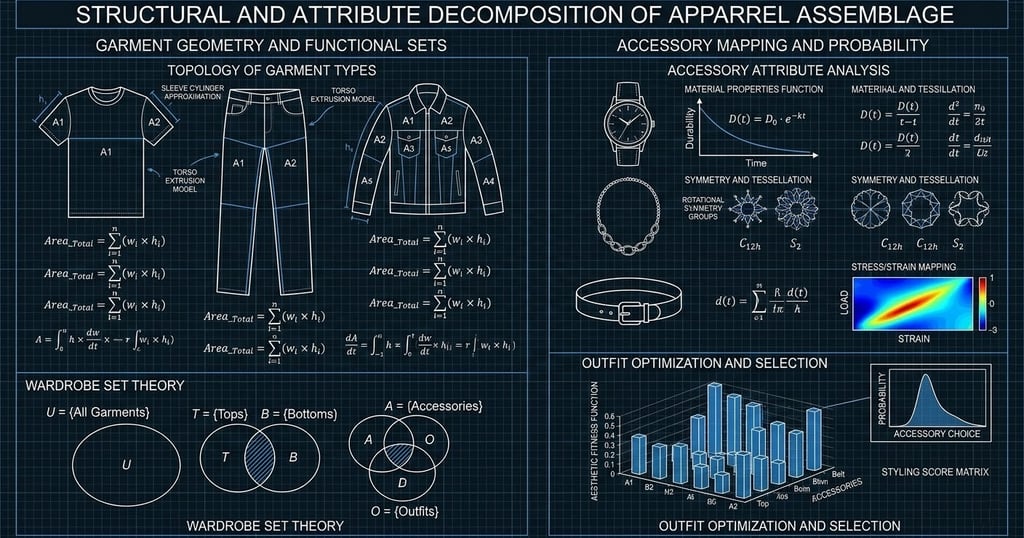
By analyzing over 35,000 images of women’s clothing spanning from 1869 to modern runways, mathematicians have confirmed that trends—such as hemlines, necklines, and waistlines—oscillate in a predictable, wave-like cycle.
The Math of Style
The research, led by applied mathematician Emma Zajdela, used a mathematical model to show that fashion trends behave like waves. This "oscillation" is driven by a fundamental social tension: the desire to stand out versus the need to fit in.
Saturation: When a style becomes too common, consumers move away to seek individuality.
The Return: After roughly two decades, a retired style feels "fresh" again to a new generation.
Example: Bell-bottoms peaked in the 1970s, vanished in the 80s, returned in the late 90s, and are resurfacing today.
A Fragmented Future
While the 20-year rule remains a strong baseline, the researchers noted that the cycle has become "messier" since the 1980s. Unlike the past, where one specific skirt length dominated, modern fashion allows for multiple trends to coexist simultaneously. This suggests that while math can predict the return of a style, the digital age has led to more variance and less conformity than ever before.
To visualize the 20-year cycle of fashion, we can track specific trends through history. For instance, the high-waisted, straight-leg jeans that are popular today are a clear reflection of the denim styles worn in the late 1990s and early 2000s.
Another example is the slip dress. Its resurgence in recent years, often layered over a t-shirt, is a direct nod to the minimalist fashion of the 1990s, when stars like Kate Moss made the look iconic. This 20-year jump shows how styles fall out of favor only to be "rediscovered" and adapted for a new generation.